
Disclosure: BDI.ie is run by the team behind Dr. Hemp Me and CBD Éire. Where we mention those brands, we have a commercial interest. More about who we are.
Last reviewed: October 2026
Plantar fasciitis is the most common cause of heel pain in adults. It is often worst with the first steps in the morning or after sitting, and it can make walking, running or standing at work miserable. This guide explains what plantar fasciitis is, the treatments with the best evidence, how long recovery usually takes, and an honest view of where CBD fits.
What is plantar fasciitis?
The plantar fascia is a thick band of tissue running along the sole of the foot from the heel to the toes, supporting the arch. Plantar fasciitis (also called plantar heel pain or plantar fasciopathy) happens when this tissue becomes irritated and thickened, usually where it attaches to the heel bone. Despite the name, long-term cases are thought to involve more wear and degeneration than inflammation.
Typical symptoms
- Sharp or stabbing pain under the heel or along the arch.
- Pain worst with the first steps in the morning or after rest.
- Pain that eases with walking but returns after long periods on your feet.
- Tenderness when pressing the inner part of the heel.
Who gets it
It is most common between 40 and 60, and in people who stand for long periods, have recently increased running or walking, carry extra weight, have tight calf muscles or flat or high-arched feet, or wear unsupportive footwear.
What helps most
Stretching
Calf stretches and plantar fascia stretches have good evidence. Before getting out of bed, pull your toes back towards your shin for 10 to 30 seconds, several times. Stretch calves against a wall two or three times a day.
Supportive footwear
Shoes with cushioned heels and good arch support help. Avoid walking barefoot on hard floors and flat, thin-soled shoes, especially in the morning.
Insoles and heel cups
Off-the-shelf arch supports or heel cups help many people. A podiatrist can advise on custom orthotics if needed.
Load management
Reduce running or long walks temporarily and swap to cycling or swimming, then build back gradually.
Rolling and ice
Rolling the sole of the foot over a frozen water bottle for a few minutes can ease discomfort.
Pain relief
Over-the-counter painkillers, as advised by your pharmacist, can help in the short term.
Further treatment
If symptoms persist for months, options include physiotherapy, night splints, shockwave therapy and, in some cases, steroid injections. Surgery is rarely needed.
How long does it take?
Most people improve within six to twelve months with simple measures, and many sooner. It can feel slow, but staying consistent with stretching and footwear changes pays off.
When to see a doctor
See your GP or a podiatrist if pain is severe, has not improved after a few weeks of self-care, started after an injury, or comes with numbness, tingling, swelling, redness or fever.
Where CBD fits
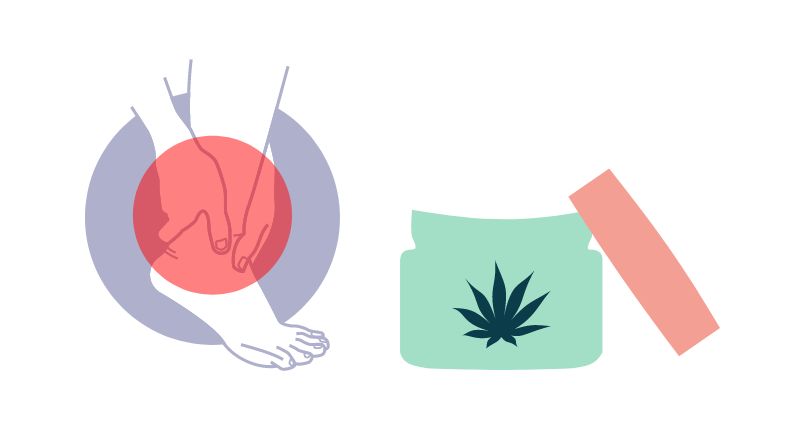
There is no research showing that CBD treats plantar fasciitis. Some people like to massage a CBD balm into the sole of the foot as part of their evening routine; the massage and stretching are likely to do most of the work. If you take CBD by mouth, follow the safety points below.
What the law in Ireland says
CBD oils, capsules and gummies are sold in Ireland as food supplements, overseen by the Food Safety Authority of Ireland. Food supplements are not allowed to claim to prevent, treat or cure any disease, so no CBD supplement can legally be sold as a treatment for plantar fasciitis. Medicines are regulated separately by the Health Products Regulatory Authority (HPRA), and cannabis-based medicines are available only on prescription in limited circumstances. If a seller tells you their CBD treats plantar fasciitis, treat that as a warning sign about the business.
If you decide to try CBD
- Speak to your GP or pharmacist first, especially if you take any regular medication. CBD is processed in the liver and can change the levels of some medicines, including blood thinners, some anti-epileptic drugs, some antidepressants and sedatives.
- Keep your proven treatment going. CBD should sit alongside the care your doctor or physiotherapist recommends, never replace it.
- Choose a lab-tested product with an independent certificate of analysis, CBD stated in milligrams and THC not detected.
- Stay within the recommended daily serving on the label, and keep the amount steady for a few weeks rather than changing it daily.
- Keep a simple diary of symptoms, sleep, activity and what you took, so you can judge honestly with your doctor whether anything changed.
- Stop if you notice side effects such as drowsiness, stomach upset or appetite changes.
Choosing a CBD product
Oils give flexible amounts by the drop, capsules and gummies give a fixed amount, and creams or balms are applied to the skin as part of a massage routine. Whichever you choose, check for an independent lab report with a batch number that matches your product, a clear THC result, a full label and a seller with real contact details in Ireland or the EU. Our guide to the best CBD oil in Ireland explains each check, and CBD and pain: what the evidence says covers the wider research.
Safety
- CBD is not recommended during pregnancy or breastfeeding, and CBD food supplements are not for children.
- Do not combine CBD with alcohol, and do not drive if it makes you drowsy.
- Do not apply creams to broken skin or wounds.
- Products containing THC can affect driving and drug tests. Only use products whose lab report shows THC is not detected.
Our position
BDI.ie is run by the team behind two Irish CBD brands, Dr. Hemp Me and CBD Éire. We sell CBD as a food supplement and we do not claim it treats plantar fasciitis. If you live with plantar fasciitis, the most useful thing you can do is get a clear diagnosis and a plan from your GP or physiotherapist. If you want to include CBD, do it with their knowledge and with realistic expectations.
Questions to ask your GP or physiotherapist
- What do you think is causing my plantar fasciitis?
- Do I need any tests, and why or why not?
- What exercises or activities should I do, and what should I avoid for now?
- What pain relief is safe for me, alongside my other medicines?
- Is it safe for me to try CBD with the medicines I take?
- What signs mean I should come back sooner?
A simple four-week diary
Whatever you try for plantar fasciitis, a short daily note makes it far easier to judge honestly. Each evening, score your plantar fasciitis from 0 to 10, note your sleep, activity, any medicines or supplements taken and anything unusual about the day. After four weeks, look back with your GP or physiotherapist. Patterns often show up that memory alone would miss.
A simple daily routine for heel pain
- Before getting up: flex your foot and pull your toes towards you 10 times; stretch the arch for 30 seconds.
- Morning: put supportive shoes or slippers on before your first steps.
- Midday: calf stretch against a wall, 3 x 30 seconds each leg.
- Work: if you stand all day, use cushioned insoles and an anti-fatigue mat where possible; sit when you can.
- Evening: roll the arch over a frozen bottle or massage ball for a few minutes, then stretch again.
Doing this every day for several weeks is far more effective than occasional intense sessions.
Runners and walkers
If plantar fasciitis started after you increased your mileage, cut back to a pain-free level and build up by no more than about 10% a week once things settle. Check your shoes; running shoes lose cushioning after several hundred kilometres. Strengthening exercises for the calf and foot muscles, guided by a physiotherapist, help prevent it coming back.
Frequently asked questions
Can CBD help plantar fasciitis?
There is no research showing CBD treats plantar fasciitis. Stretching, footwear, insoles and load management have the best evidence.
What is the fastest way to heal plantar fasciitis?
Consistent calf and plantar fascia stretching, supportive shoes, insoles and reducing aggravating activity give the best results.
How long does plantar fasciitis last?
Most cases improve within six to twelve months with self-care.
Should I walk barefoot with plantar fasciitis?
Avoid walking barefoot on hard floors, especially first thing in the morning.
Is plantar fasciitis inflammation?
Long-standing cases are thought to involve more tissue degeneration than inflammation.
Does massage help plantar fasciitis?
Massage and rolling can ease discomfort, especially combined with stretching.
When should I see a doctor for heel pain?
If it is severe, not improving after a few weeks, followed an injury, or comes with numbness, swelling or fever.
Can I use CBD cream on my heel?
You can as part of a massage routine on unbroken skin, but there is no evidence it treats plantar fasciitis.
Related guides
This guide is for general information only and is not medical advice. CBD products sold in Ireland are food supplements or cosmetics, not medicines. Speak to your GP or pharmacist before using CBD, especially if you take medication, are pregnant or breastfeeding.